Mayeryn AI Vision Picker
Beschreibung
ein fortschrittliches System für Auffinden und Kommissionieren von Elementen aus Körben, Gürteln und Behältern. Es kombiniert KI für die Erkennung mit 3D-Geometrie Berechnen Sie die exakte Position und Ausrichtung des Elements und geben Sie dem Roboter den optimalen Kommissionierpunktein
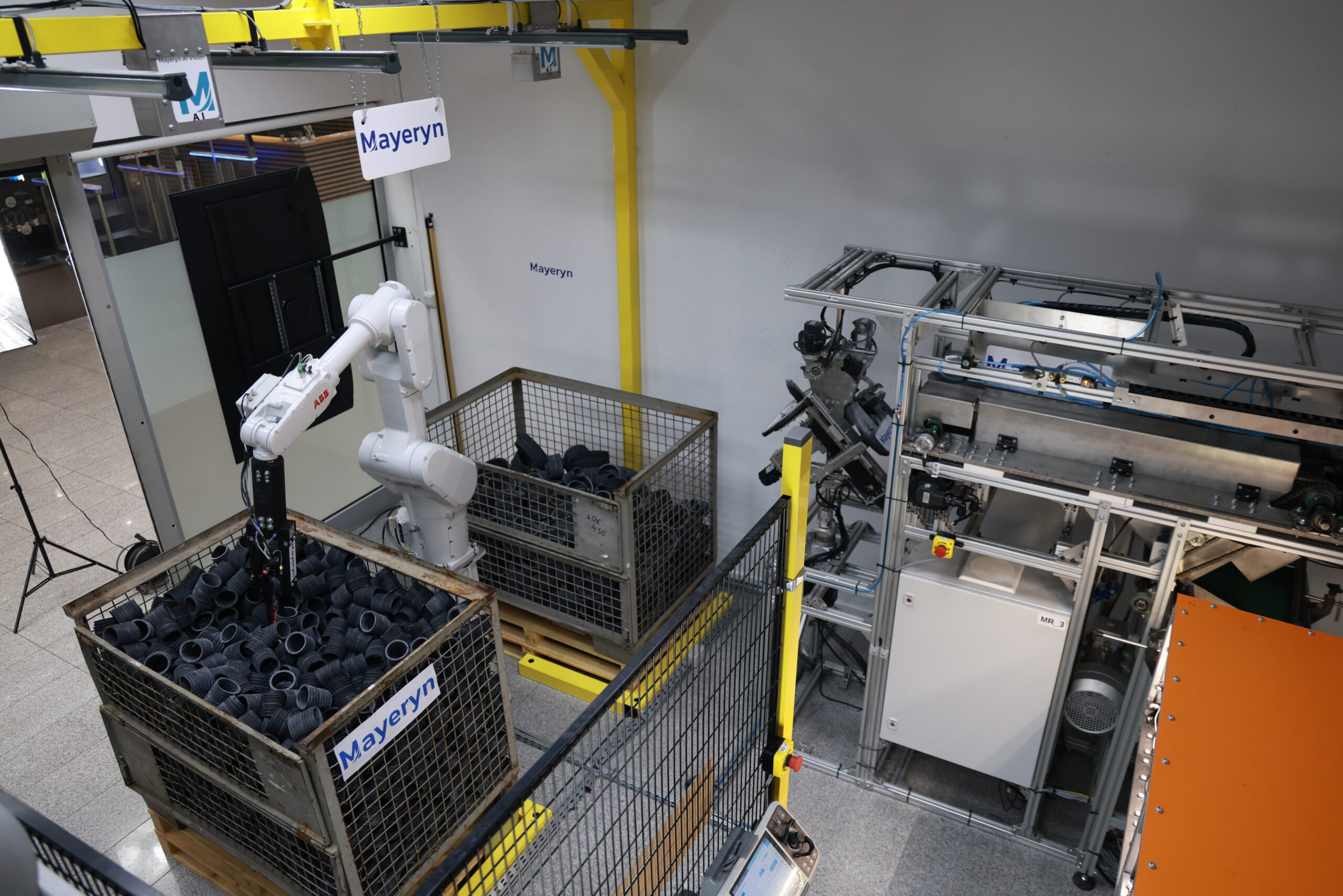
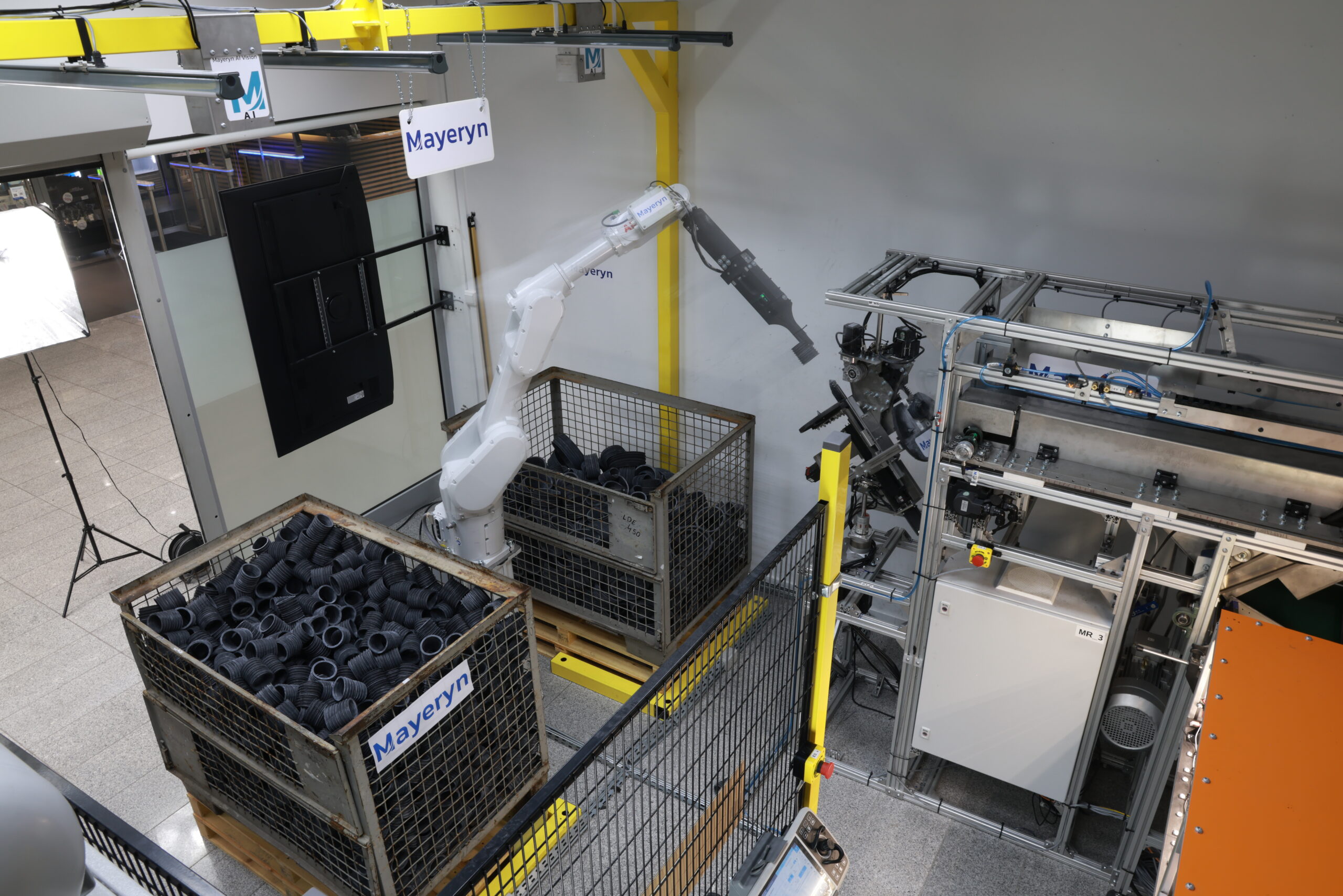
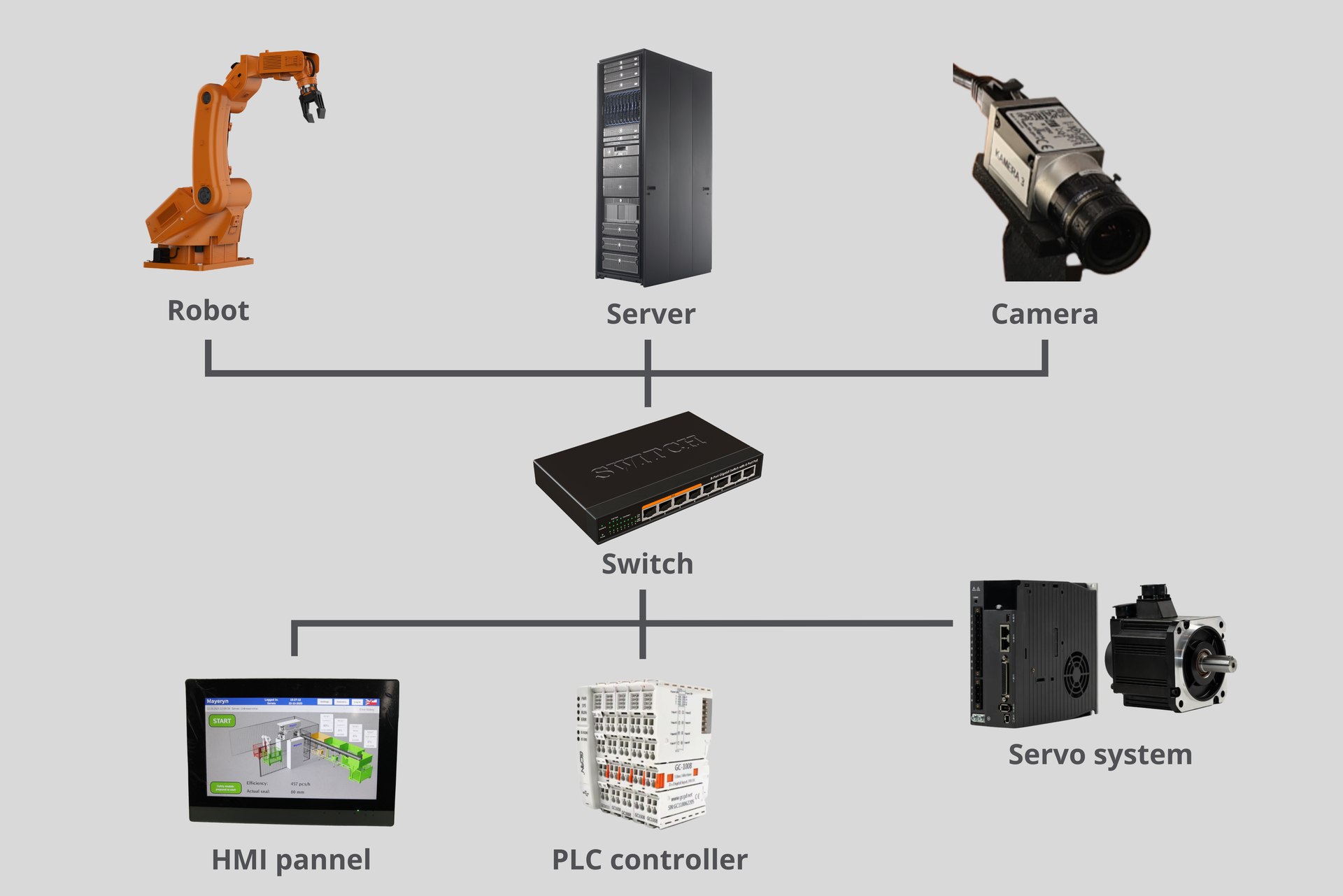
- > ist für die Steuerung von Robotern, Cobots und anderen Manipulatoren mit 2 bis 7 Achsen geeignet
- > kann im 2D- und 3D-Raum arbeiten
- > kann mit jeder Kamera (2D und 3D), Lidar, Sonar, Radar oder Röntgengeräten zusammenarbeiten
Video, das den Betrieb des Mayeryn AI Vision Picker zeigt
Für welche Materialien?
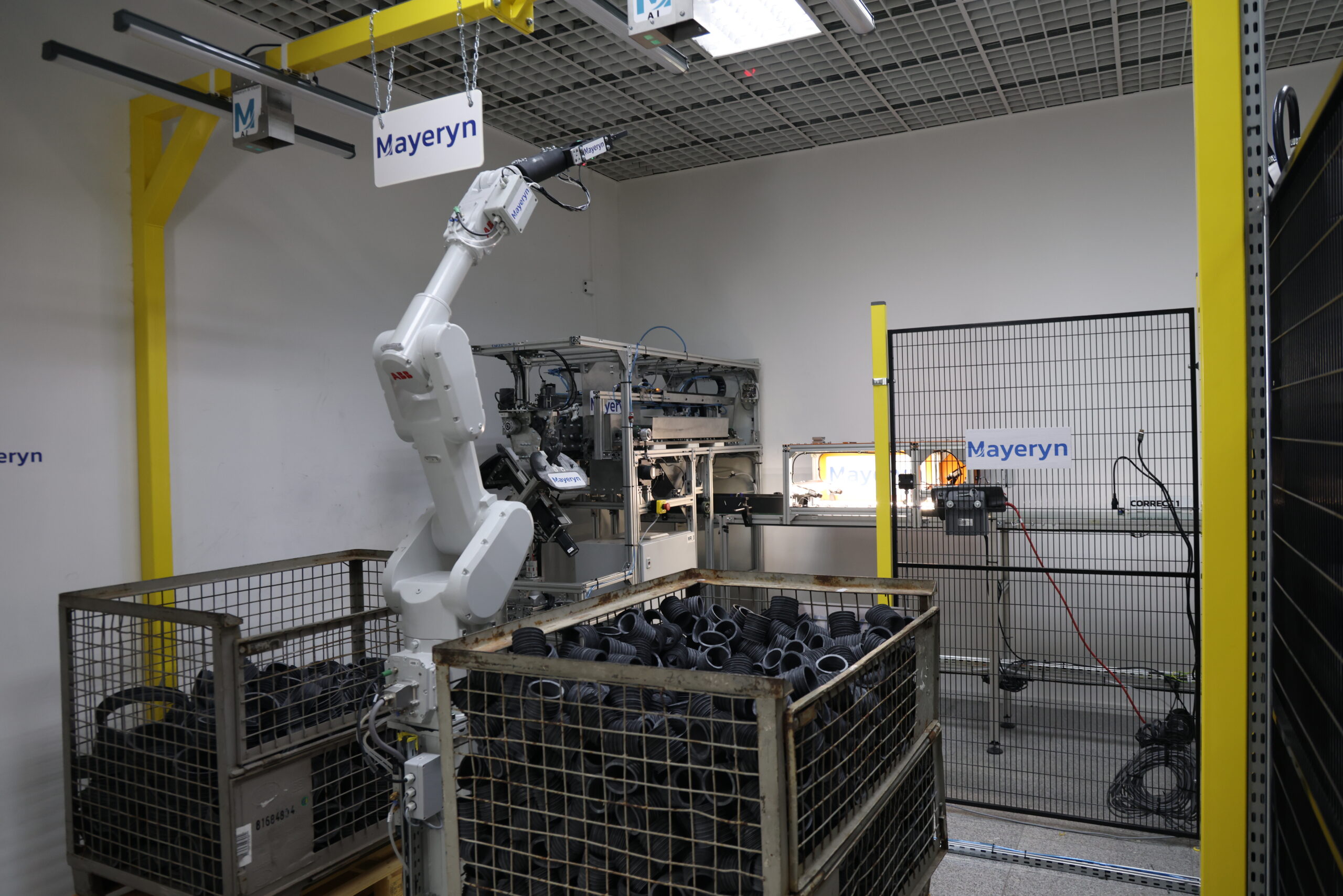
Es eignet sich hervorragend für Anwendungen, die das Greifen aus einem Karton, Behälter, einer Palette, einem Container, einem Förderband oder von einem Tisch beinhalten, wobei die Elemente in zufälligen Positionen und Ausrichtungen liegen und anschließend präzise an einem bestimmten Ort platziert werden.
Es bewährt sich zudem bei Elementen mit unregelmäßigen Formen (z. B. Autoteile), instabilen und flexiblen Materialien wie Gummi, EPDM, Fleisch, Fisch sowie Hartmetallelementen vor dem Sintern.
Es eignet sich hervorragend für Anwendungen, die das Greifen aus einem Karton, Behälter, einer Palette, einem Container, einem Förderband oder von einem Tisch beinhalten, wobei die Elemente in zufälligen Positionen und Ausrichtungen liegen und anschließend präzise an einem bestimmten Ort platziert werden.
Es bewährt sich zudem bei Elementen mit unregelmäßigen Formen (z. B. Autoteile), instabilen und flexiblen Materialien wie Gummi, EPDM, Fleisch, Fisch sowie Hartmetallelementen vor dem Sintern.
Hauptmerkmale
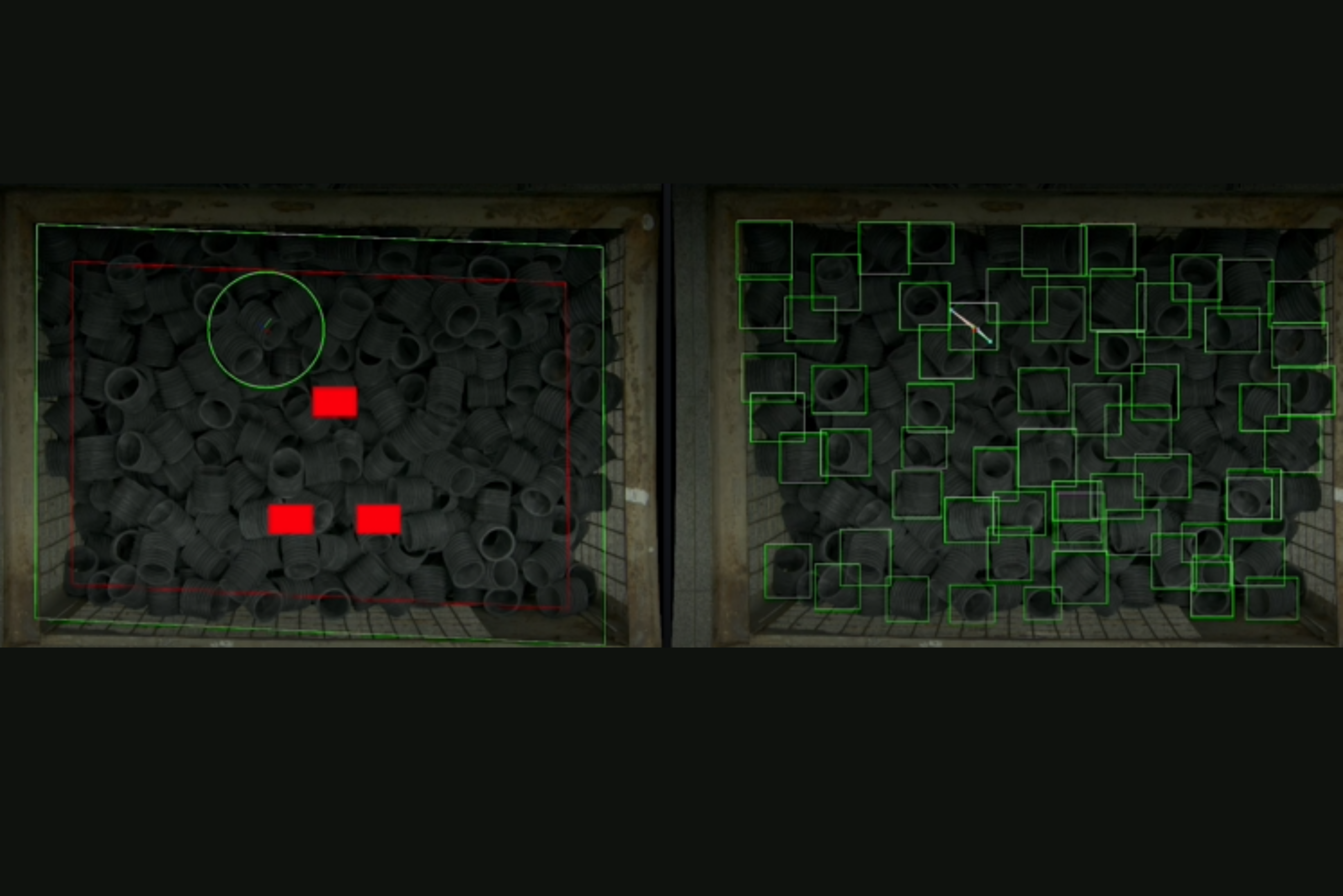
- > Erkennung und Identifizierung der Form des Elements.
- > Orientierungsnäherung basierend auf charakteristischen Merkmalen.
- > Bestimmung der 3D-Position mittels 3D-TOF-Kameras.
- > Generierung von Greiftrajektorien für Roboter.
- > Integration mit SPS- und Python-Servern (Modbus, TCP/IP).
Technische Daten
- > Kapazität: 1–5 Bilder/s – abhängig von der Dichte der Elemente (kann erhöht werden);
- > Elementanalysezeit: 50–1000 ms (kann verkürzt werden);
- > Anzahl der Trainingsbilder: 100 – 5000 Bilder;
- > Greifgenauigkeit: 5–25 mm, abhängig von Kameraabstand und Objekttyp (Genauigkeit kann auf bis zu 0,05 mm erhöht werden);
- > Handhabung schwieriger Elemente: Reflexionen, hoher Kontrast, unregelmäßige Formen;
- > Warteschlangen- und Multithreading-System;
Skalierbarkeit
Mayeryn AI Vision Picker ist dank seines modularen Aufbaus skalierbar und kann somit sowohl in einfachen Anwendungen, die keine hohe Präzision oder Verarbeitungsgeschwindigkeit erfordern, als auch in Systemen eingesetzt werden, in denen Hunderte Gigabyte pro Sekunde verarbeitet werden müssen, bei einer Präzision im Bereich von Hundertstelmillimetern und einer Fehlerfreiheit von 99,95 %.
Video zur Vorstellung des Betriebs der Linie, die auf Mayeryn AI Vision basiert.
Ausrüstungsliste
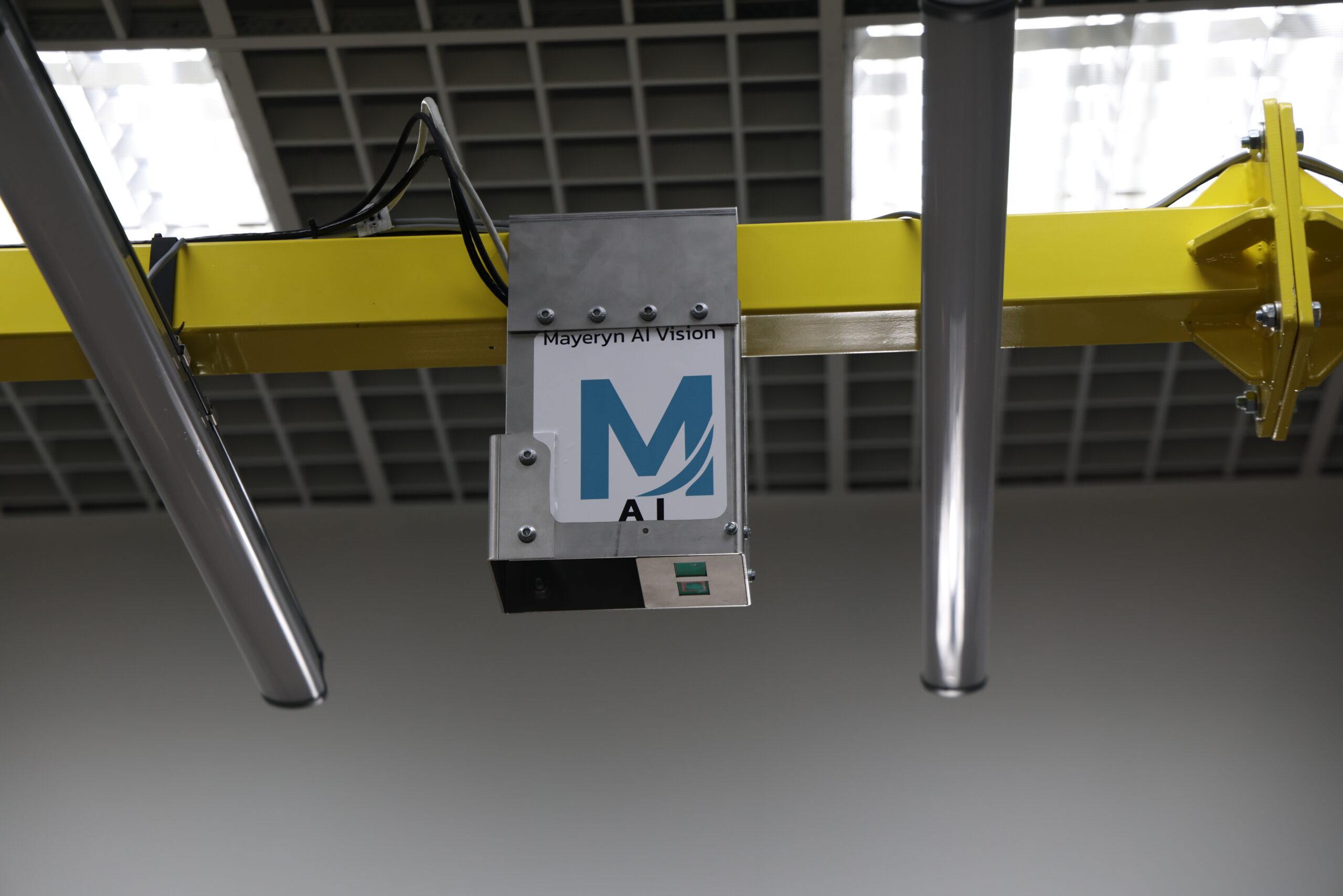
- > Hochauflösende 2D-Kamera > 20 MP;
- > 3D-Kamera;
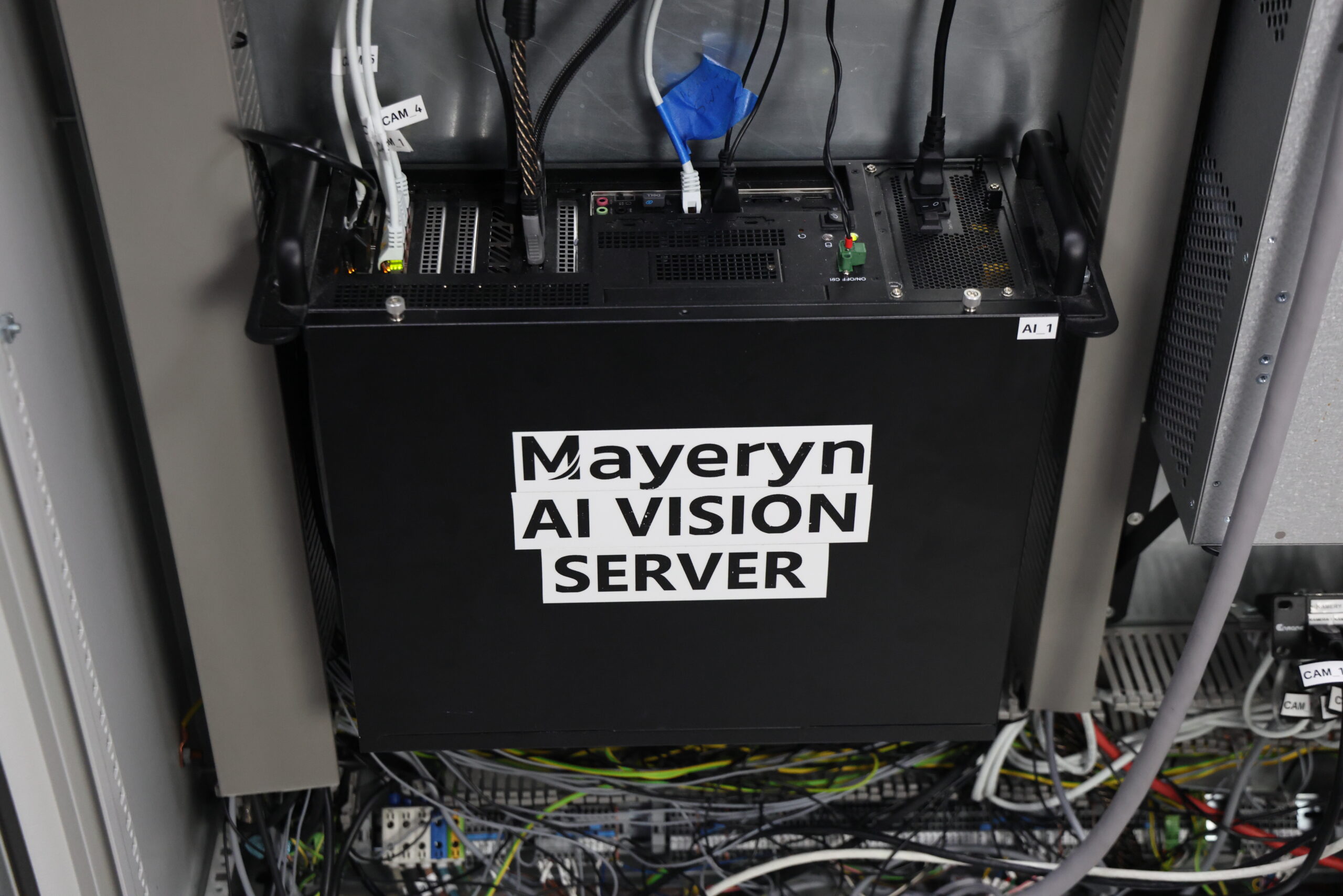
- > Bildverarbeitungsserver;
- > SPS + Aktoren;
- > Optionale Integration mit einem ABB-Roboter über ein Kommunikationsmodul;
Zusätzliche Verbesserungen
- > Automatische Fehlerprotokollierung und Arbeitsverfolgung;
- > Bedienpanel/Web-Benutzeroberfläche (Kameravorschau, Parameteränderungen, Statistiken);
- > Active-Learning-Modus – das System fordert den Bediener selbstständig auf, fehlende Labels hinzuzufügen, und ergänzt diese in der Trainingsdatenbank;
- > Anomalieerkennung (unüberwacht), nützlich, wenn Defekte schwer zu definieren sind;